

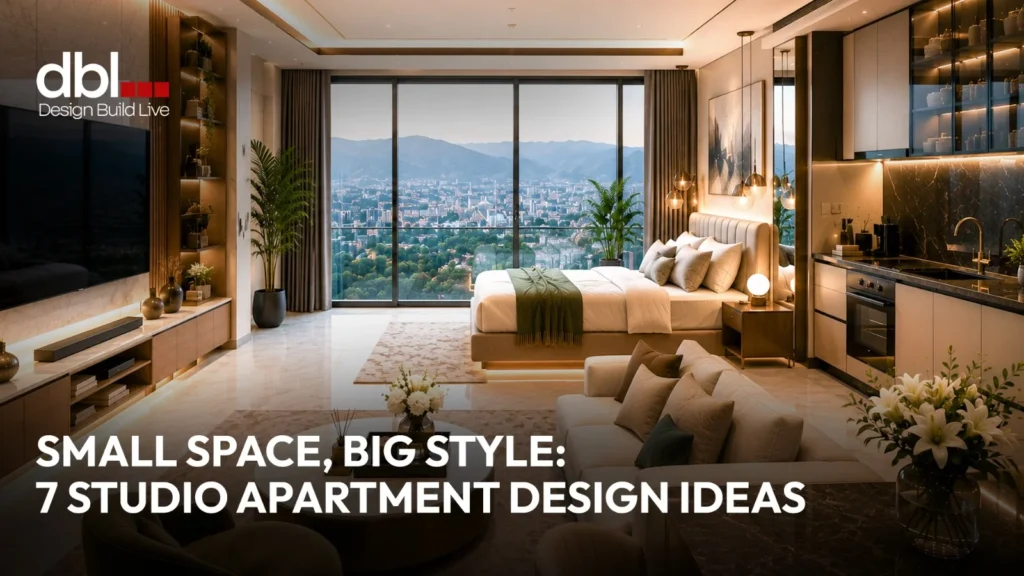
You’ve just signed the lease on your new studio in Bahria Town, DHA, or one of Islamabad’s new mid-rise buildings. Congrats—but now comes the real question: How do you make 400 square feet feel like an actual home and not just a glorified bedroom?
Here’s what most people get wrong: they think bigger budgets create better studios. They don’t. We’ve seen cramped apartments with expensive designer pieces look worse than thoughtfully planned spaces with IKEA finds.
The difference? Early decisions beat expensive furniture every single time.
What follows are the exact strategies apartment designers in Islamabad and Rawalpindi are using right now to make compact studios look spacious, livable, and genuinely stylish.
1. Define Zones Without Using Walls
The studio’s biggest challenge is also its greatest opportunity: no walls means zero natural divisions. You need a sleeping area, a living area, and a kitchen—but building actual walls would shrink everything into a shoebox.
So here’s what works: Use your furniture and lighting to carve out invisible rooms.
Furniture Placement Techniques:
- Position your sofa to face the living area—it becomes a soft architectural barrier between sleeping and living zones
- Use a large area rug (2.4m x 1.8m) beneath the sofa to psychologically define the living room
- Place console tables or low credenzas at zone transitions to mark boundaries without blocking sightlines
- Apply half-height open shelving to frame spaces while maintaining light flow and visual continuity.
Lighting Strategy for Zone Definition:
- Cove lighting softly illuminates the bed area at night, creating a separate sleeping zone
- Pendant lights above the dining corner pull focus downward and establish the eating area
- Recessed or ambient lighting fills the living space with even, warm illumination
2. Use a Neutral Base With One Bold Accent
Neutral shades are always the best choice for studio flat interior design ideas. They are more reflective and make the room look bigger.
Recommended color palettes for Pakistani studio apartments:
| Color Tone | Temperature | Best For | Why It Works |
| Warm White | Warm | Overall walls, ceilings | Reflects light, brightens space |
| Soft Greige | Warm | Accent walls, textiles | Blends beige + grey sophistication |
| Sandy Beige | Warm | Feature walls, larger surfaces | Earthy, welcoming, expansive feel |
| Taupe | Warm | Trim, architectural details | Depth without darkness |
| Soft Grey | Neutral | Smaller accents only | Risk of dullness in variable light |
Warm whites, soft greige tones, sandy beige, and taupe shades work best in apartments in Islamabad, as the light outside varies throughout the day. Sometimes, cooler shades of grey can make small flats seem dull or uninteresting.
Now for the one accent. Pick just one. Everything else recedes.
- Upholstered Headboard — Deeply olive or charcoal anchors the sleeping zone
- Feature Wall — Charcoal texture, dramatically focal without overwhelming
- Kitchen Cabinetry — Rich walnut veneer or matte black, warm and intentional
- Statement Chair — Rust color, burnt orange, or jewel tones demand attention
- Lighting Fixture — Matte black pendant lights above the dining counter feel expensive and curated
The use of bold elements is limited to one section, creating a sense of a curated space that doesn’t become visually overloaded. The effect? Curated. Intentional. Spacious. Not chaotic.
3. Built-In Storage — Floor to Ceiling
Freestanding furniture in a studio apartment is the enemy of open space. A standalone wardrobe, a dresser, a nightstand—each one eats floor area and makes the room feel cramped.
Why vertical storage transforms small spaces?
Floor-to-ceiling wardrobes and built-in joinery do something magical in compact apartments. They hide all that awkward dead space above cabinets that typically screams “small apartment.” Full-height storage creates the optical illusion that your walls stretch higher. Your space feels taller, leaner, less boxed in.
Built-In Storage Solutions Checklist for Rawalpindi & Islamabad Studios:
- Floor-to-ceiling wardrobes with mirrored doors
- Under-bed hydraulic lift systems with pull-out drawers
- Built-in bedside shelving
- Integrated kitchen storage with tall cabinets
- Floating shelves in the living zone
- Compact fold-away desk or wall-mounted workspace
- Corner shelving units
- Overhead storage rails or ceiling-mounted systems
This is especially smart in Rawalpindi’s newer compact complexes, where ceiling heights are already modest. You’re using every inch.
4. Choose Multifunctional Furniture Options
Studio apartments should have multiple-use items as furniture.
Sofa Bed:
- Smooth, effortless operation (test 50+ times before purchase)
- Minimum 25-28 density Mattress foam for daily use comfort
- Hardwood or metal frame—never particleboard
- 5-7 years with regular use
Extendable Table:
- Self-storing leaves are easier than separate pieces
- Solid wood or quality veneer material
- 3.5m to 4.5m length for entertaining
- Collapses to 1.2m for everyday use by two people
Wall-Mount Desk:
- 25-30 kg minimum for laptop + peripherals
- Heavy-duty hinges and brackets rated for 1000+ cycles
- Gas struts for smooth, safe operation
- 60cm x 40cm minimum for functional workspace
Nesting Table:
- 3-piece sets work best (separates for entertaining, groups for space)
- Light wood or metal for easy repositioning
- Durable finish that resists scratches
The principle is simple: Every stick of furniture should do at least two things.
5. Layer Your Lighting
Compact spaces get smaller and less appealing with bad lighting. Well-layered lighting creates depth, atmosphere, and visual interest. A studio with great lighting feels 20% larger than the same apartment with flat, harsh illumination.
There are 3 essential lighting layers:
Ambient Lighting
Your baseline illumination. Ceiling-mounted fixtures, recessed lights, or cove lighting provide the foundation. Think of this as your “blank canvas” lighting.
Best Fixtures:
- Recessed downlights (3-4 units, evenly spaced)
- Cove lighting along the ceiling edges
- Flush-mount or semi-flush fixtures (don’t drop visual space)
- LED panel lights (modern, efficient, neutral appearance)
Task Lighting
Targeted light for specific functions. A reading corner needs a floor lamp or wall sconce. Your kitchen counter demands bright, focused light. A vanity mirror benefits from carefully positioned bulbs. Pendant lights above dining areas are both functional and stylish.
Best Fixtures:
- Pendant lights (dining, kitchen counter)
- Wall sconces (reading areas, bedside)
- Under-cabinet LED strips (kitchen work surfaces)
- Desk lamps with adjustable arms (workspace)
- Mirror-mounted vanity lights (grooming areas)
Accent Lighting
The details that add warmth and dimension. LED shelf lighting highlights your curated objects. Floor lamps create cozy corners. Hidden strip lighting in wardrobes adds sophistication without bulk.
Best Fixtures:
- LED strip lighting (shelves, wardrobes, behind headboard)
- Floor-standing arc lamps (living zones)
- Table lamps with fabric shades (warmth, softness)
- Picture lights (above artwork)
- Rope lighting (architectural edges, cove detailing)
Light Color Temperature for Studio Apartments
| Light Temperature | Kelvin Rating | Appearance | Best Used In | Effect on Space |
| Warm White | 2700K | Soft, golden, cozy | Bedrooms, living areas, and lounges | Intimate, relaxing, smaller |
| Neutral White | 3000K | Balanced, natural | Bathrooms, entryways, general | Natural, calm, balanced |
| Cool White | 4000K | Bright, crisp, clinical | Kitchens, workspaces, vanities | Alert, functional, expansive |
| Daylight | 5000K-6500K | Very bright, blue-tinted | Task-intensive areas only | Clinical, energy-boosting |
Pro Installation Tips for Smart Lighting Controls:
- Use dimmers on all ambient and accent lights
- Install separate switches for each layer
- Consider smart bulbs for remote temperature adjustment
- Use motion sensors in bathrooms/entry
A cove lighting approach paired with subtle wall sconces is genuinely one of the best studio apartment design decisions you can make. Your space feels intentional and relaxing.
6. Use Mirrors Strategically
A strategically placed mirror doubles the perceived depth of your entire space. A full-height mirror positioned directly across from a window reflects natural light deep into your apartment. The room feels open, expansive, and genuinely larger.
Critical Mirror Placement Rules:
DO:
- Place a full-height mirror directly across from the window to maximize light reflection
- Use mirrored wardrobe doors as the primary mirror solution (function + illusion)
- Position one mirror per zone—sleeping area, living area, entry
- Mount mirrors at eye level (150-165cm from floor to center)
- Use mirrors to reflect artwork, plants, or architectural features
DON’T:
- Put mirrors on multiple walls in the same room (looks like a gymnasium)
- Place mirrors facing mirrors (creates disorienting infinite reflections)
- Use small scattered mirrors throughout (fragmented, chaotic effect)
- Mount mirrors on walls opposite each other (fitting room effect)
- Use heavy ornate frames that add visual bulk to small spaces
7. Keep the Floor Plan Open — Resist Overcrowding
The most frequent studio rental mistake is honestly attempting to fit too much into the space.
Many house owners count on performance capacity, including extra storage units, extra chairs, extra facet tables, and greater ornamental elements. In reality, overcrowding makes a studio space demanding and visually chaotic.
A well-designed studio rental frequently consists of fewer fixtures than humans expect. For example,
- A cautiously chosen sofa
- One accent chair
- A compact eating setup
- Integrated storage
What Professional Designers Do
1. Start with essential pieces only:
- Bed, sofa, dining table, storage
- Lighting fixtures (layered)
- Window treatments
2. Add strategic accent pieces:
- 1 statement chair
- 1 console table or credenza
- 3-4 decorative objects max
3. Evaluate and remove:
- Does each piece serve a visual or functional purpose?
- Does it contribute to the overall design narrative?
- Does removing it improve the space?
4. Final styling:
- Decorative items: 8-12 maximum
- Wall art: 1-3 pieces
- Plants: 3-5 statement pieces
- Textiles: 2-3 coordinating throws/pillows
A studio with eight thoughtfully selected pieces consistently feels more luxurious and spacious than one crammed with fourteen items.
Need Help Designing Your Studio Apartment in Rawalpindi and Islamabad?
Designing a small apartment requires strategy, not just style. The early decisions you make have a lasting impact—especially for storage, layout, and spatial flow.
If you’re considering professional design help for your studio in Islamabad or Rawalpindi, our team at DBL works with apartment owners, investors, and tenants to create modern, efficient, and personalized studio interiors—from design concept through finishing and furnishing.
We handle the complete process so nothing falls between the cracks:
- Space planning and zone definition
- Lighting design and installation coordination
- Custom storage solutions (built-ins, wall-mounts)
- Furniture curation and procurement
- Final styling and installation
Book a studio apartment design consultation with us today. Let’s make your small space feel like exactly what you want it to be.
Frequently Asked Questions
1. How can I make a studio apartment feel larger?
Use light colors on walls, maximize vertical storage, keep furniture minimal and low-profile, and incorporate mirrors to reflect light and create depth. Multi-functional pieces like ottomans with storage and Murphy beds also help maximize space.
2. What’s the best furniture layout for a studio?
Arrange furniture to create distinct zones: sleeping area in one corner, living space in another, and kitchen/dining in the remaining area. Use area rugs, shelving, or screens to define spaces without closing them off, maintaining an open, airy feel.
3. How do I separate my bedroom and living areas in a studio?
Use room dividers, curtains, sliding doors, or open shelving to create visual separation. A bookcase, fabric screen, or even a tall plant can define boundaries without consuming floor space or blocking light.
4. What lighting works best in small studios?
Layer your lighting with overhead fixtures, task lighting (desk lamps, reading lights), and ambient lighting (floor lamps, wall sconces). Avoid heavy overhead lighting alone; varied light sources make the space feel larger and more inviting.
5. Should I use bold colors or neutral tones in a studio?
Neutral walls (white, beige, gray) make studios feel bigger, but you can add bold colors through accent walls, artwork, or accessories. This balance gives personality without overwhelming the limited space.