
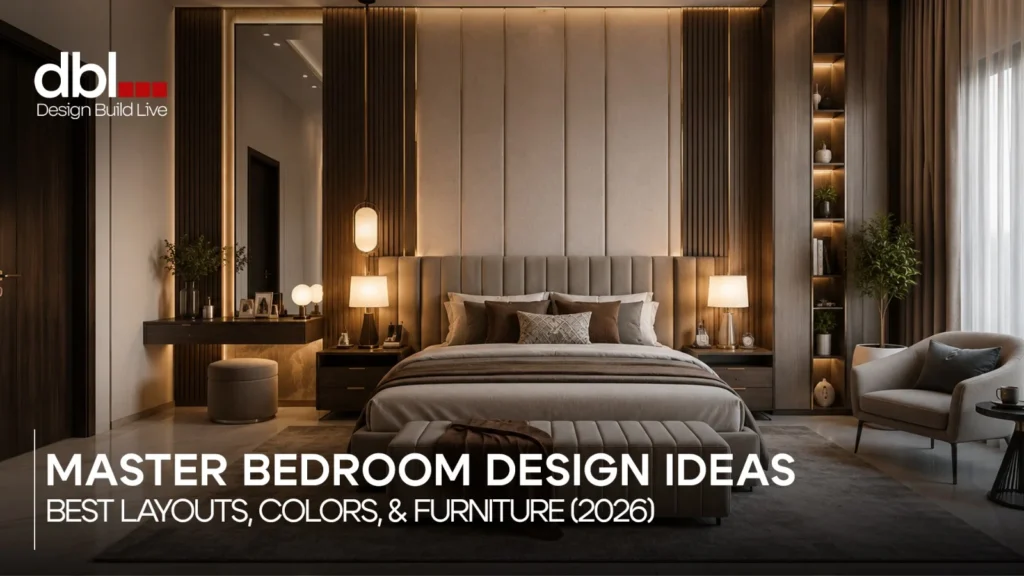
The master bedroom serves as a private retreat within your Pakistani home. This space requires thoughtful design planning that balances aesthetics, functionality, and cultural preferences.
A well-designed master bedroom increases home value, improves sleep quality, and reflects your personal style while respecting the constraints of Pakistani architecture and climate. Partnering with a professional interior design service ensures every element — from layout to lighting — works cohesively for your specific space.
Whether your home occupies a compact Islamabad apartment or sprawls across an Islamabad villa, master bedroom design principles adapt to your specific space. This guide provides actionable strategies for creating bedroom interiors that maximize comfort, incorporate modern design elements, and work within realistic budgets.
Modern Bedroom Design Styles for Pakistani Homes
Creating the right aesthetic sets the tone for your entire bedroom experience. Pakistani homes benefit from design styles that respect local architecture, climate, and cultural preferences while incorporating modern functionality.
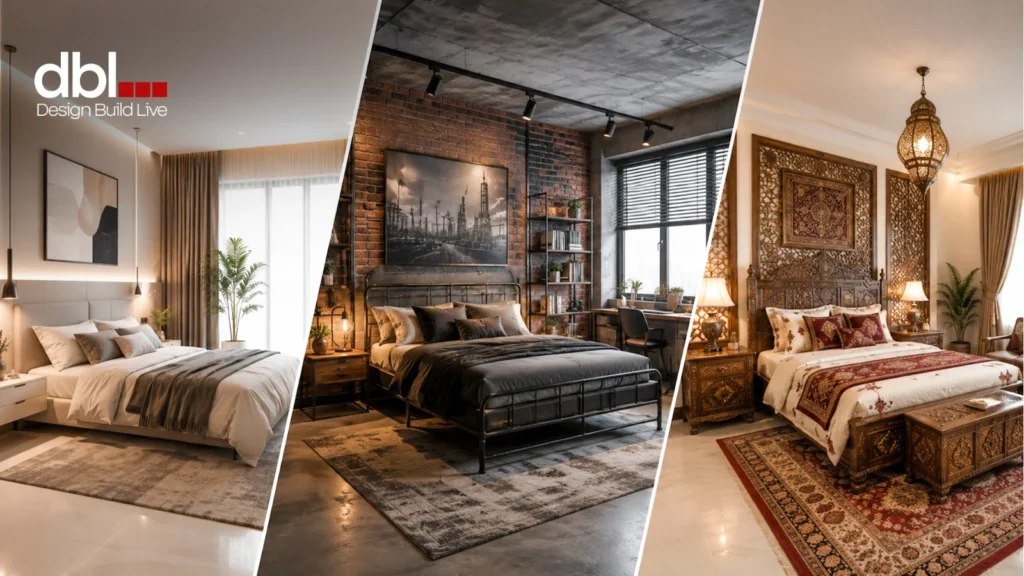
The three primary bedroom design approaches:
Contemporary Minimalist Bedrooms
Contemporary minimalist design emphasizes clean lines, neutral color palettes, and uncluttered spaces. This style suits Pakistani homes because it creates visual spaciousness—particularly valuable in smaller bedrooms common to urban Islamabad and Lahore apartments.
Contemporary Minimalist Bedrooms Features:
- Simple bed frames (platform or low-profile metal)
- Neutral wall colors: white, soft gray, warm beige, pale cream
- Hardwood or polished concrete flooring
- Minimal decorative accessories
- Functional storage integrated into walls
Create Minimalist Interiors in Pakistani Homes:
- Start with white or soft gray walls as your foundation—these colors reflect heat and light, making your bedroom feel naturally cooler.
- Select one statement piece (typically the bed frame) and build around it rather than introducing multiple furniture items.
- Use wall-mounted storage to free floor space, creating an airy feeling even in compact 10×12-foot apartments common in Lahore.
Budget Estimate (12ft × 14ft room):
| Item | Estimated Cost (PKR) |
| Platform bed frame | 25,000–45,000 |
| Mattress | 30,000–60,000 |
| Bedside tables (pair) | 8,000–15,000 |
| Wardrobe/storage | 40,000–80,000 |
| Paint and décor | 10,000–20,000 |
| Total Estimated Budget | 113,000–220,000 |
For tailored minimalist design in the twin cities, see how our top interior designers in Rawalpindi approach contemporary home transformations.
Modern Industrial Bedrooms
Industrial bedroom design borrows elements from warehouse aesthetics: exposed brick, metal fixtures, concrete accents, and reclaimed wood. This aesthetic appeals to younger professionals in Rawalpindi, Lahore, and Islamabad seeking contemporary bedroom interiors with character and personality.
Industrial Bedroom Characteristics:
- Exposed brick walls or brick-textured wallpaper
- Metal bed frames and industrial shelving
- Concrete or polished cement flooring
- Edison-style vintage lighting fixtures
- Raw wood furniture and floating shelves
- Neutral palette with metallic accents
Industrial Bedroom Implementation Strategy:
- Feature one accent wall with exposed brick or brick pattern
- Select a metal bed frame as the primary statement piece
- Add 2–3 industrial metal shelves for storage and display
- Include soft textiles (cushions, rugs, throws) to balance hardness and add warmth
- Position vintage-style task lighting strategically for functional and aesthetic impact
- Consider a raw wood accent wall or ceiling treatment for dramatic effect
Industrial bedrooms suit professionals working from home, as the style seamlessly incorporates workspace without compromising aesthetic cohesion. The aesthetic’s functionality supports both relaxation and productivity.
Traditional Pakistani Bedroom Design
A traditional Pakistani bedroom incorporates cultural design elements while maintaining contemporary comfort. If you’re working with a larger villa space, explore our luxury villa interior design in Islamabad for elevated design direction.
Hand-carved wooden bed frames, intricate mirror work reflecting traditional jharokha (window) designs, kilim rugs, embroidered cushions (chikankari or zardozi), and warm earth-tone color schemes celebrate local craftsmanship and design heritage.
Traditional elements to incorporate:
- Hand-carved wooden bed frames sourced from specialized carpenters in Lahore, Peshawar, or Rawalpindi
- Intricate mirror work reflecting traditional architectural patterns (particularly jharokha designs)
- Colorful kilim or dhurrie rugs as focal floor elements
- Embroidered cushions and wall hangings in traditional patterns
- Carved wooden screens or jali patterns for privacy
- Warm earth-tone color schemes (terracotta, deep ochre, warm browns, sand)
Add a modern twist on tradition:
- Pair hand-carved wooden elements with contemporary textiles, clean wall colors, and modern lighting.
- Use traditional patterns sparingly to prevent visual clutter.
- A single statement wall featuring traditional mirror work or wallpaper coordinates beautifully with minimalist modern furniture.
- Mix heritage pieces with contemporary accessories—a vintage wooden bed frame with modern linen bedding, a traditional kilim rug with minimalist wall art.
Choosing the Right Bedroom Color Scheme
Color selection impacts mood, perceived room size, psychological comfort, and perceived temperature. Pakistan’s intense sunlight—particularly in Lahore, Karachi, Rawalpindi, and Islamabad—demands careful color consideration.
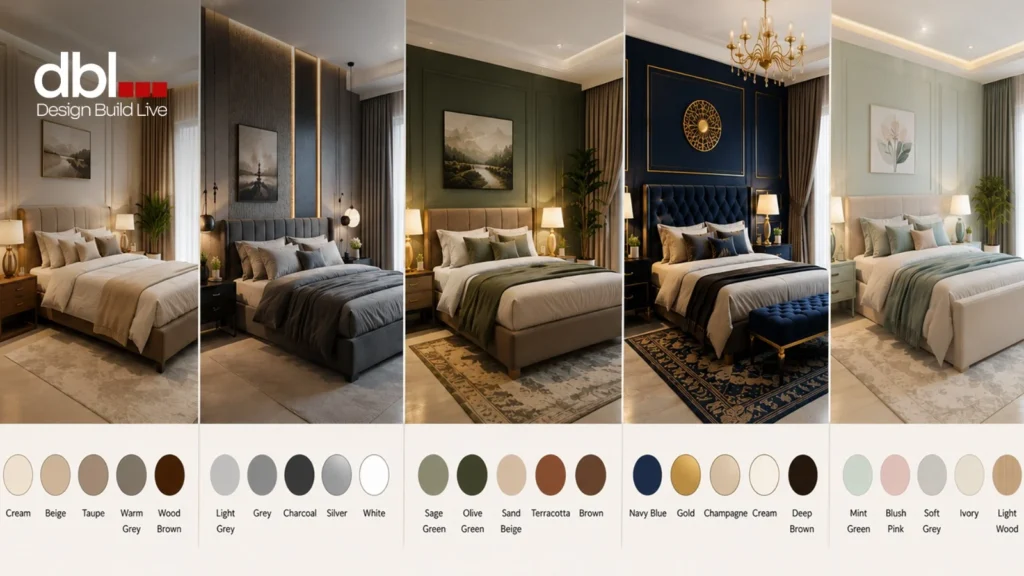
The right colors cool your bedroom psychologically, improve sleep quality, and create cohesive aesthetic appeal.
Best Colors for Pakistani Master Bedrooms
Color impacts emotional state, with cool tones promoting relaxation and warm tones creating intimacy. In Pakistan’s hot climate, color psychology directly influences perceived room temperature and energy consumption.
| Color Palette | Primary Colors | Best For | Climate Suitability |
| Cool & Calming | Soft blue, pale gray, white | Stress relief, visual coolness, sleepiness | Excellent—cooler visually, reduces heat stress |
| Warm & Inviting | Warm beige, soft cream, taupe | Intimate atmosphere, coziness | Good—north-facing rooms with minimal sunlight |
| Earth Tones | Olive green, warm brown, sand | Grounded, natural aesthetic, psychological stability | Excellent—traditional appeal, hides dust |
| Neutral Modern | White, light gray, greige | Clean aesthetic, versatility, expansion | Excellent—matches any décor, works year-round |
Strategic Color Placement by Room Orientation
- North-facing bedrooms (minimal direct sunlight): Use warmer colors (soft yellows, warm creams, light peaches, warm grays). These colors counteract the cool, dim quality of north-facing light, preventing the room from feeling cold or depressing.
- South and west-facing bedrooms (intense afternoon heat): Use cool colors (soft blues, soft sage greens, light grays, whites) to visually cool the space and psychologically counteract heat stress. These colors also hide dust and heat-related wall discoloration better than warm tones.
- East-facing bedrooms (gentle morning light): Nearly all color schemes work well here, as consistent morning light flatters most colors. Choose based on personal preference and design direction.
Introducing Accent Colors Strategically
Introduce accent colors through textiles, artwork, and décor rather than painting multiple walls. This approach provides design flexibility and allows seasonal updates.
Accent color application methods:
- One accent wall: Position the accent wall as your primary focal point—typically the bed wall or window wall.
- Textile accents: Use throw cushions, bed runners, and rugs in accent colors.
- Artwork and decoration: Select wall art incorporating accent colors to tie the scheme together.
- Lighting effects: Warm or cool-toned lighting adjusts the perceived color temperature of painted walls.
Bedroom Furniture Selection & Layout
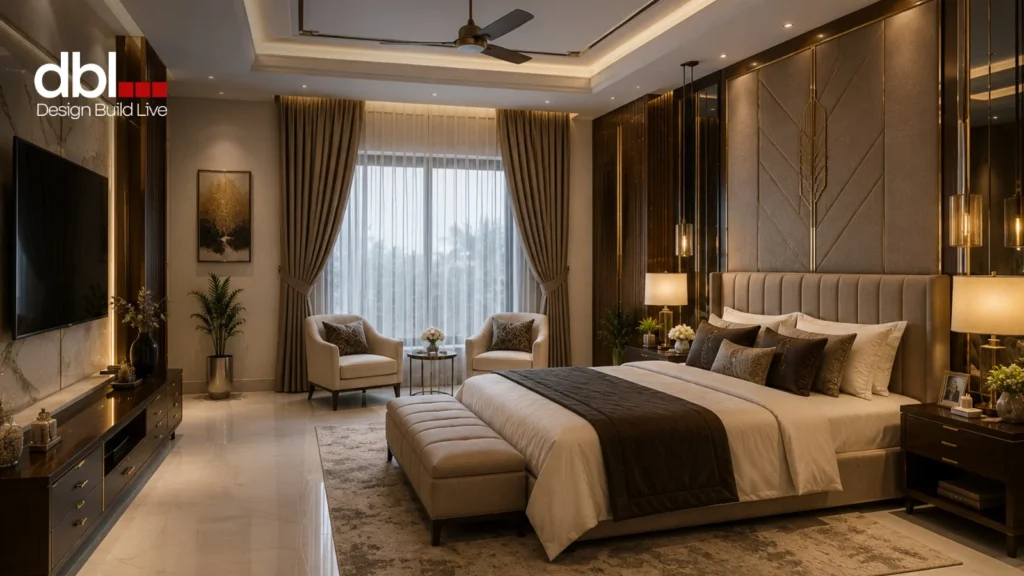
Furniture selection represents the largest investment in bedroom design and determines functional capacity and visual aesthetic. Strategic furniture choices maximize usable space, support intended activities, and create visual balance. Pakistani bedrooms typically accommodate 4–6 major furniture pieces.
Essential Furniture Pieces for Master Bedrooms
A functional bedroom requires specific furniture pieces prioritized by budget and functional importance. Every piece should serve a clear purpose—decorative items that provide no function invite clutter and visual chaos.
Furniture prioritization by importance:
- Bed frame and mattress – Largest investment (PKR 55,000–105,000) and primary focus. Sleep quality depends directly on mattress selection.
- Bedside tables – Functional storage for nighttime essentials (water, books, phone, glasses, medications). Height should match the bed height for ergonomic arm movement.
- Wardrobe/closet system – Organized clothing storage, preventing clutter that compromises sleep quality and mental peace.
- Dressing table – Mirror and seating for grooming routines, creating a dedicated self-care space. A quality dressing table elevates morning and evening routines.
Secondary furniture (add as budget permits):
- Additional shelving or storage units
- Low console table behind seating
- Ottoman or bench at the foot of the bed
- Accent chair for reading or relaxation
- Plants and decorative accessories
Bed Selection & Placement Strategy
The bed anchors the bedroom design, consumes the largest visual space, and directly affects sleep quality. Bed selection involves choosing size, frame style, and mattress quality—each decision impacts functionality and aesthetic.
Bed size determination:
| Bed Type | Dimensions (cm/ft) | Best For | Estimated Cost (PKR) |
| Single Bed | 90 × 190 cm (3 ft × 6.3 ft) | Space-saving option for guest rooms, children’s bedrooms, or small apartments | 20,000–40,000 |
| Queen Bed | 152 × 190 cm (5 ft × 6.3 ft) | Standard choice for Pakistani master bedrooms, comfortably accommodating couples | 35,000–60,000 |
| King Bed | 183 × 190 cm (6 ft × 6.3 ft) | Luxurious option requiring a minimum room width of 12 ft | 45,000–80,000 |
| Double Bed | 137 × 190 cm (4.5 ft × 6.3 ft) | Middle-ground option for couples seeking a more compact sleeping arrangement | – |
Note: Double bed prices vary significantly by manufacturer and material according to the city.
Working with a compact footprint? Our guide on interior design ideas for studio apartments covers space-maximizing strategies directly applicable to small master bedrooms.
Bed frame styles suited to Pakistani homes:
- Platform beds – Low-profile, clean lines, storage space underneath for seasonal items or under-bed organizers.
- Upholstered beds – Soft headboard adds comfort when reading in bed and has an elegant appearance.
- Wooden frames – Traditional appeal and exceptional durability to support Pakistani aesthetics.
- Metal frames – Industrial aesthetic, easy to clean, economical, works with contemporary or industrial design.
- Storage beds – Integrated drawers beneath the mattress maximize small room space, providing hidden clothing or linen storage.
Optimal bed placement techniques:
- Position against the longest wall to create a spacious feeling and maximize usable floor area
- Avoid placing directly opposite the door (traditional belief about sleeping position, plus practical privacy benefit)
- Ensure at least 3 feet of clearance on the sides for comfortable movement, cleaning, and sheet changing
- Position away from windows and AC units to prevent drafts from interrupting sleep and causing illness
- North or west wall placement maximizes morning light exposure, helping circadian rhythm alignment
- Create a visual focal point by positioning the bed prominently, then arranging other furniture around it
Storage Solutions & Organization
Organized storage prevents clutter, maximizes available space, reduces visual chaos, and supports mental clarity. Bedroom organization directly impacts sleep quality—cluttered, disorganized spaces trigger stress and anxiety even subconsciously.
| Storage Type | Cost (PKR) | Best For | Space Efficiency |
| Built-in wardrobe | 60,000–150,000 | Permanent installations, maximum utilization | Excellent—uses wall space fully |
| Free-standing wardrobe | 25,000–80,000 | Flexibility, rental-friendly, and easier relocation | Good—portable |
| Under-bed storage | 5,000–15,000 | Seasonal items, shoes, linens, comforters | Excellent—hides items |
| Wall-mounted shelves | 8,000–25,000 per unit | Display items, minimalist aesthetic, books | Excellent—vertical space utilization |
| Hanging organizers | 2,000–8,000 | Door-space utilization, scarves, belts, accessories | Good—maximizes unused door area |
Dressing Table as Focal Point
A well-designed dressing table functions as both a practical grooming space and a bedroom focal point. Quality dressing table setups (PKR 20,000–40,000, including furniture, lighting, and mirror).
Dressing table placement strategy:
- Position near a natural light source (window) for daytime grooming using free natural light
- Face the mirror toward the main bedroom entrance for visibility and psychological openness
- Allow 3 feet of clearance in front for comfortable chair movement and stool pulling out
- Locate away from bed to create distinct functional zones
- Consider privacy by positioning the dressing area where early-morning routines don’t disturb the sleeping partner
Lighting Design for Ambiance & Function
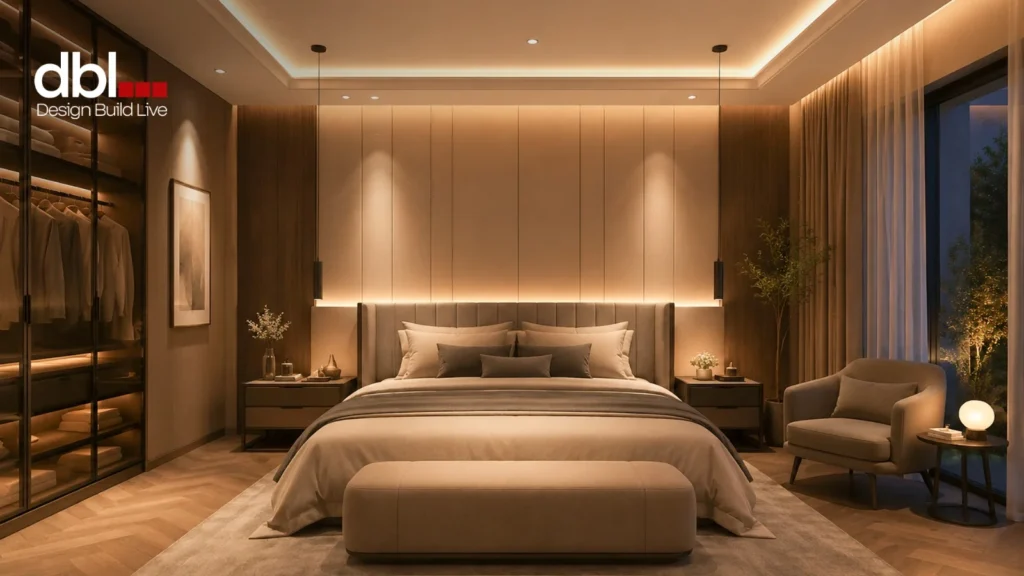
Lighting design significantly impacts bedroom functionality, aesthetic appeal, mood, and sleep quality. A single harsh ceiling light creates an institutional feel and disrupts circadian rhythm. Strategic layered lighting accommodates varied activities (reading, dressing, relaxing) while promoting healthy sleep patterns.
Layered Lighting Strategy for Optimal Functionality
Effective bedroom lighting combines three distinct types, each serving specific purposes:
| Lighting Type | Purpose | Fixtures | Brightness Range |
| Ambient | Overall room illumination, general visibility | Ceiling fixtures, recessed lights, fan with light, cove lighting | 200–400 lumens |
| Task | Activity-specific lighting for reading, grooming, and dressing | Bedside lamps, dressing table lights, reading lights, wall sconces | 300–600 lumens |
| Accent | Mood-setting, decorative, psychological warmth | Wall sconces, strip lights, and pendant fixtures behind the headboard | 50–150 lumens |
Research demonstrates that lighting design directly affects mood, sleep quality, and circadian rhythm. Bright overhead lighting suppresses the sleep hormone, making the bedroom feel more alert.
Layered lighting with dimmable warm ambient light and soft task lighting supports melatonin production, promoting earlier sleep onset and deeper sleep quality.
Specific Lighting Fixtures & Placement for Pakistani Bedrooms
Each fixture type serves distinct purposes and fits different design aesthetics. Strategic placement ensures even illumination without harsh shadows.
| Lighting Option | Purpose & Benefits | Estimated Cost (PKR) | Installation Tips |
| Recessed LED Downlights | Clean, modern look; dimmable for flexible lighting; ideal for contemporary and minimalist bedrooms | 2,000–5,000 per fixture | Install 4–6 fixtures in a 12 × 14 ft bedroom for even illumination |
| Ceiling Fan with Integrated Light | Combines ambient lighting with cooling | 8,000–15,000 | Suitable for both traditional and modern interiors |
| Pendant Lights | Decorative focal point above the bed or in a corner | 3,000–10,000 per fixture | Requires a minimum ceiling height of 8 ft |
| Flush-Mount Fixtures | Space-saving solution for low ceilings; complements both traditional and modern styles | 2,000–6,000 | Ideal for older homes with lower ceiling heights |
| Cove Lighting | Soft indirect lighting for a luxurious, ambient glow | 4,000–8,000 (installation + fixtures) | Installed within ceiling coves or crown molding |
| Table Lamps (LED Equivalent 60–80W) | Portable; suitable for reading and decorative lighting | 2,000–6,000 per lamp | Choose adjustable brightness and place near a power outlet |
| Wall-Mounted Reading Sconces | Saves bedside table space; provides focused reading light | 3,000–7,000 per sconce | Install approximately 60 cm above the mattress height |
| Clip-On Reading Lights | Flexible positioning; ideal for rental homes | 1,500–4,000 | Battery-operated or plug-in options available |
| Mirror-Mounted LED Strips | Shadow-free illumination for grooming | 2,000–5,000 | Install on both sides of the mirror for even facial lighting |
| Wall Sconces (Mirror Side Lights) | Professional salon-style lighting | 3,000–8,000 per pair | Mount at eye level (approximately 150 cm from the floor) |
| Track Lighting | Adjustable light direction for grooming or accent lighting | 4,000–10,000 | Best suited for modern or industrial-style interiors |
| Wall Sconces | Creates a warm, intimate atmosphere with indirect lighting | 2,000–6,000 per fixture | Mount at 150–180 cm from the floor for balanced proportions |
| LED Strip Lighting | Enhances headboards or wall edges with a modern, customizable glow | 1,500–4,000 | Install behind the headboard or along wall edges; use dimmable strips for mood lighting |
Light Color Temperature & Sleep Science
Light color temperature significantly impacts perceived warmth, mood, and sleep quality. Color temperature measured in Kelvin (K) indicates light’s warmth or coolness.
Color temperature options and psychological effects:
- Warm white (2700K) – Amber tone resembling sunset, relaxing, reduces alertness, suitable for evening and bedtime. Promotes melatonin production, supporting natural sleep. Ideal for bedroom lighting
- Cool white (4000K) – Neutral tone, energizing without overwhelming, suitable for morning preparation and work activities
- Daylight white (5000K–6500K) – Blue tone, highly alerting, suppresses melatonin production, suitable for task work; avoid 2–3 hours before bedtime
Smart lighting supporting color temperature adjustment (warm 2700K at 9 pm, transitioning to 4000K at 6 am) optimizes circadian alignment.
Climate-Appropriate Bedroom Design for Pakistan
Pakistani climate—hot summers (45°C+), humid monsoon seasons, mild winters—influences material selection and design strategies.
| Design Element | Heat-Reducing Strategy | Materials |
| Wall color | Light, reflective colors | White, pale cream, soft gray, light pastels |
| Flooring | Cool materials reduce temperature | Marble, ceramic, light wood, polished concrete |
| Window treatments | Reflective or blackout capability | Light-colored blinds, thermal curtains, shutters |
| Textiles | Breathable, moisture-wicking | Cotton, linen, lightweight blends |
| Ventilation | Ceiling fans, cross-flow design | Fans year-round; AC positioned away from the bed |
| Furniture materials | Non-heat-absorbing options | Metal, light wood, breathable upholstery |
- Choose moisture-resistant materials (teak wood, painted surfaces, ceramic).
- Avoid upholstered furniture in high-humidity zones.
- Install exhaust fans.
- Use semi-gloss paint.
- Monitor humidity (ideal: 40–60%).
- Position wall-mounted AC units at 6–7 feet high on the wall opposite the bed
- Use ceiling fans during mild seasons (Nov–March), AC during extreme heat (Apr–Sept)
Master Bedroom Design Cost Breakdown
| Tier | Investment (PKR) | Furnishings | Timeline |
| Basic | 80,000–150,000 | Bed, mattress, wardrobe, bedside table, paint | 2–3 weeks |
| Standard | 150,000–300,000 | Above + quality wardrobe, dressing table, lighting | 4–6 weeks |
| Premium | 300,000–600,000 | Above + designer pieces, integrated storage, smart lighting | 8–12 weeks |
| Luxury | 600,000+ | Custom furniture, premium materials, professional consultation | 12+ weeks |
Your Bedroom Transformation Awaits
Creating a beautiful, functional master bedroom is achievable regardless of budget. Strategic planning and phased implementation produce a significant impact. Pakistan’s diverse architectural traditions, dynamic climate, and skilled artisan community provide abundant resources for success.
Key Takeaways:
- Measure accurately – Room dimensions guide all decisions
- Choose your style – Commit to design direction
- Plan storage strategically – Organization prevents clutter
- Layer lighting intentionally – Support varied activities
- Respect climate realities – Light colors and breathable fabrics ensure comfort
- Invest in quality basics – Prioritize bed frame, mattress, and bedding
- Personalize thoughtfully – Décor reflecting your style creates meaning
- Implement phased approach – Budgeted rollout prevents financial strain
See how these principles come to life in real homes — browse our completed interior design projects across Islamabad and Rawalpindi for inspiration.
Ready to Transform Your Bedroom?
Schedule a consultation with DBL Interior Design today. Our expert designers specialize in creating beautiful, functional bedrooms suited to Pakistani homes, climates, and lifestyles. Whether reimagining your entire master bedroom or refining existing space, our interior designers in Islamabad & Rawalpindi provide personalized solutions maximizing your investment.
Frequently Asked Questions
What is the ideal master bedroom size?
A standard master bedroom in Pakistan is typically 12 × 14 feet (3.7 × 4.3 meters), providing enough space for a queen-size bed, wardrobes, bedside tables, and comfortable circulation. Smaller bedrooms measuring 10 × 12 feet work well with single or double beds, while larger rooms of 14 × 18 feet or more can accommodate king-size beds, seating areas, dressing spaces, and additional storage.
How can I maximize storage in a small bedroom?
Choose furniture that serves multiple purposes, such as storage beds with drawers, tall wardrobes, floating shelves, and wall-mounted cabinets. Use under-bed storage boxes, over-door organizers, and hooks to reduce clutter. Keeping only essential furniture pieces and utilizing vertical wall space can significantly increase storage.
What is the best lighting setup for a master bedroom?
The ideal bedroom lighting combines ambient, task, and accent lighting. Install ceiling lighting with dimmers for general illumination, bedside lamps or reading sconces for task lighting, and LED strips or decorative wall sconces for ambiance. Warm white LED bulbs with a 2700K color temperature create a comfortable and relaxing environment suitable for bedrooms.
Should I hire an interior designer for my bedroom?
Hiring an interior designer is worthwhile if you’re planning a complete renovation, working with a budget above PKR 400,000, or need custom furniture and space planning. A professional designer can optimize layouts, coordinate contractors and suppliers, manage project timelines, and help avoid costly design or purchasing mistakes.
How can I update my bedroom on a limited budget?
Affordable upgrades can dramatically improve your bedroom without a full renovation. Repainting the walls (PKR 10,000–20,000), replacing bedding and cushions (PKR 3,000–8,000), upgrading lighting (PKR 3,000–10,000), rearranging furniture, and adding artwork or decorative mirrors (PKR 2,000–15,000) can refresh the space while keeping costs under control.